You can stock a full Montessori shelf for ages 1–6 with things already in your kitchen, bathroom, laundry room, junk drawer, and garage. A muffin tin, a colander, clothespins, painter’s tape, jar lids, and a cardboard box cover most of the core skills between them.
- Organized by room and by item, not by curriculum area, so you can grab what is in front of you and start in five minutes.
- Every activity lists an age range and the skill it builds.
- A summary table (item → activity → ages → skill) and a printable shelf-rotation checklist are near the end.
- If your drawer does not match this list, tell the Activity Generator what you actually have.
Most lists of “Montessori activities with household items” are the same list: pouring, buttoning, a salt tray, a mystery bag. Those are good activities, and we already cover them in our 3-year-olds guide and the practical life guide. This post is for the moment after you have read those and are standing in your kitchen with a toddler on your leg thinking, “fine, but what do I do with a muffin tin?”
So it is organized the way your house is: kitchen, bathroom, laundry room, living room and junk drawer, then the garage and yard. Each item gets one or two activities with an age range and the skill it builds. Ages 1 to 6 is a wide span on purpose: the same cardboard box is a posting box for a one-year-old and a car ramp for a six-year-old, and I say how to bump each item up or down.
The 5-minute setup rules
- One item, one tray. A baking sheet, a shoebox lid, or a placemat. It marks where the work starts and ends, and it catches the mess.
- Show it once, slowly, without talking. Then hand it over and sit back.
- Lay things out left to right. Bowls, cups, cards. A quiet rehearsal for reading direction.
- Put the cleanup on the tray too. A small sponge, a dustpan, a cloth. Cleaning up is part of the activity.
- Small parts rule. If your child still puts things in their mouth, anything that fits through a toilet-paper tube is off the tray. Swap beans for large jar lids. Supervise regardless.
- Stop while it is still fun. Back on the shelf before the meltdown, and it gets chosen again tomorrow.
Kitchen: Montessori activities with a muffin tin, colander, tongs and more
Muffin tin
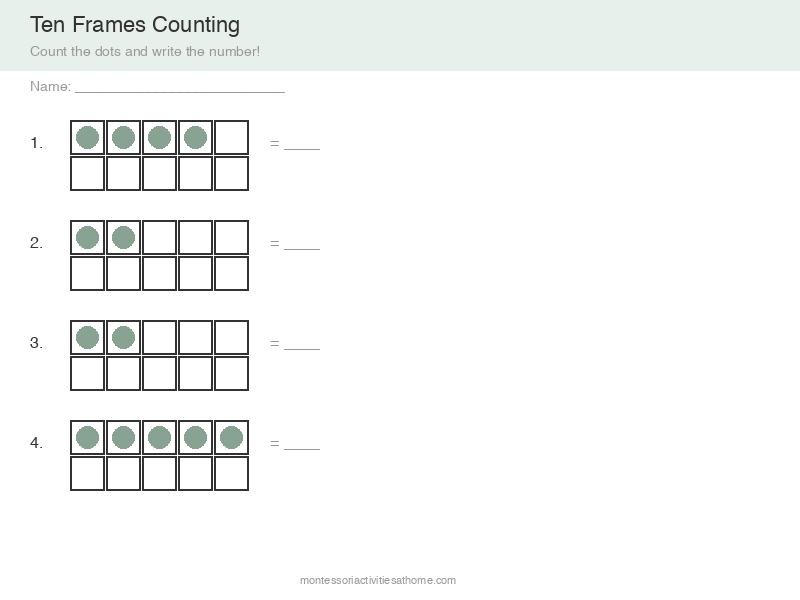
Ten-frame math (ages 4–6). Tape over two cups of a 12-cup tin so ten are left. Give your child a bowl of dry beans and call out a number. They drop one bean in each cup until they reach it, then tell you how many cups are empty. That empty count is “how many more to make ten,” which is exactly what number bonds are. Builds: number bonds to 10, one-to-one counting.
Sort by type (ages 2–4). Mix three pasta shapes (or three kinds of dried beans) in a bowl. Your child sorts them into cups, one type per cup. Under three, use jar lids and bottle caps instead. Builds: classification, pincer grip.
Colander
Threading (ages 1.5–3). Flip the colander upside down and hand over dry spaghetti or pipe cleaners. Your child pushes them into the holes. Spaghetti snaps when they push too hard, which is its own lesson in pressure. For a 4- to 6-year-old, swap in a shoelace and weave it in one hole and out the next. Builds: hand-eye coordination, pincer grip, wrist control.
Measuring cups
How many make a cup? (ages 4–6). A bowl of rice, a quarter-cup, and a one-cup measure. Your child guesses how many quarter-cups fill the big one, then tests it, counting as they pour. Repeat with the half-cup. Builds: capacity, estimating, a first feel for fractions.
Kitchen tongs
Cotton-ball transfer (ages 2–4). Two bowls, one full of cotton balls, placed left and right. Your child moves them one at a time with tongs, then moves them back. For a 3- to 5-year-old, make it ice cubes in a bowl of water instead. Builds: hand strength, the open-close motion that becomes scissor and pencil control, crossing the midline.
Sponge
Squeeze transfer (ages 2–4). Cut a sponge into three strips. Two bowls: one with an inch of water, one empty. Soak, carry, squeeze, repeat until all the water has moved. Builds: hand strength (the muscles that tire out during early handwriting), sequencing.
Dry beans and rice
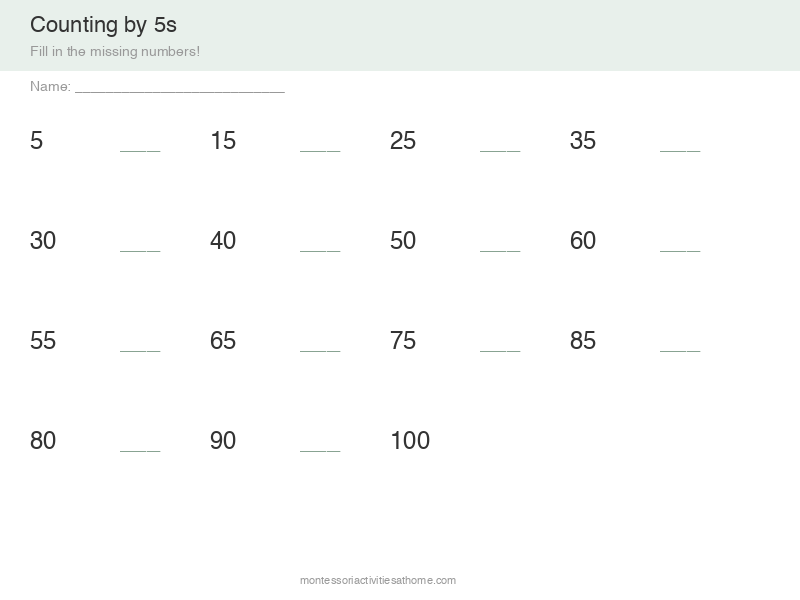
Count by fives (ages 5–6). Pour beans onto a tray. Your child makes piles of five, touching each bean as they count. Then count the piles together: five, ten, fifteen, up to fifty. Builds: skip counting, grouping, the ground floor of multiplication.
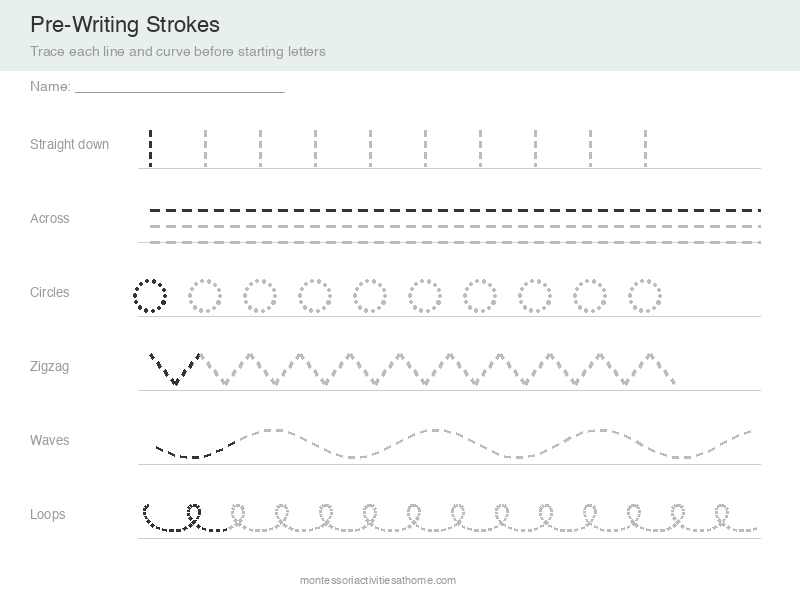
Rice writing tray (ages 3–6). A thin layer of rice on a baking sheet. Before letters, do strokes: straight lines, zigzags, loops, circles, with one finger. Shake to erase. The letter version (in salt) is in the 3-year-olds guide; strokes come first and are usually skipped. Builds: pre-writing control, directionality.
Jar lids
Lid match (ages 1.5–3). Four to six empty jars of different sizes, lids off and mixed up. Your child finds the lid that fits and twists it on. A wrong lid will not screw down, so they can tell without you saying a word. Builds: size discrimination, wrist rotation, self-correction.
Egg carton
Sound cups (ages 4–5). Write a letter in the bottom of each cup. Say a sound, not a letter name (“mmm,” not “em”), and your child drops a bean in the matching cup. For a 5- or 6-year-old, write digits instead and call out “three plus two.” Builds: letter-sound matching, then early addition.
📬 Never hunt for printables again
Join the free list and get new worksheets, coloring pages, and activity ideas in your inbox — free, printable, kid-tested.
No spam, unsubscribe anytime.
Bathroom: activities for bath time
Cardboard tube (toilet paper or paper towel roll)
Drop tube (ages 1–2). Tape the tube to the side of the tub at your child’s chest height. Hand over large pom-poms or jar lids (nothing that fits through the tube, so the tube is your safety test). Drop it in the top, watch it come out the bottom, repeat. Builds: cause and effect, object permanence, deliberate release.
Medicine syringe
Fill to the line (ages 2–6). The plastic syringe from the children’s pain reliever. Two cups, one with water. Draw up, squirt into the empty cup, repeat. For a two-year-old, that is the whole activity. For a five-year-old, ask for exactly 5 ml, then 3 ml. Builds: hand strength, precision, early measurement.
Whatever is on the bath shelf
Sink or float (ages 2–5). A comb, a bar of soap, a sponge, an empty bottle with the lid on, a plastic cup. Your child guesses, drops it in, and sorts it onto one of two towels: sinks or floats. Then try the bottle with the lid off. Builds: prediction, classification, science words (heavy, light, hollow).
Laundry room: clothespins and a laundry basket
Clothespins
Pin the line (ages 2.5–5). String between two chairs at your child’s shoulder height, a basket of socks and washcloths, a bowl of wooden clothespins. Pin everything up, then take it all down. The pinch that opens a clothespin uses the same three fingers as a pencil grip. Builds: pincer strength, hand endurance.
Clip count (ages 4–6). Write a number on the rim of a few paper plates. Your child clips that many pins around the edge. Too many and they run out of rim, so the plate corrects them. Builds: number recognition, one-to-one counting.
Laundry basket
Sock pairing (ages 2–4). Dump the clean socks on the floor. Find the pairs, lay one on the other, fold the cuffs together. Real work the household actually needs, and children can tell the difference. Builds: visual matching, contributing.
Basket toss (ages 2–6). Tape three lines on the floor: one, two, and three steps from the basket. Toss rolled socks from each line and count how many land. Older children keep score. Builds: throwing, distance judgement, counting, turn-taking.
Living room and junk drawer: sticky notes, tape, a box, old keys
Sticky notes
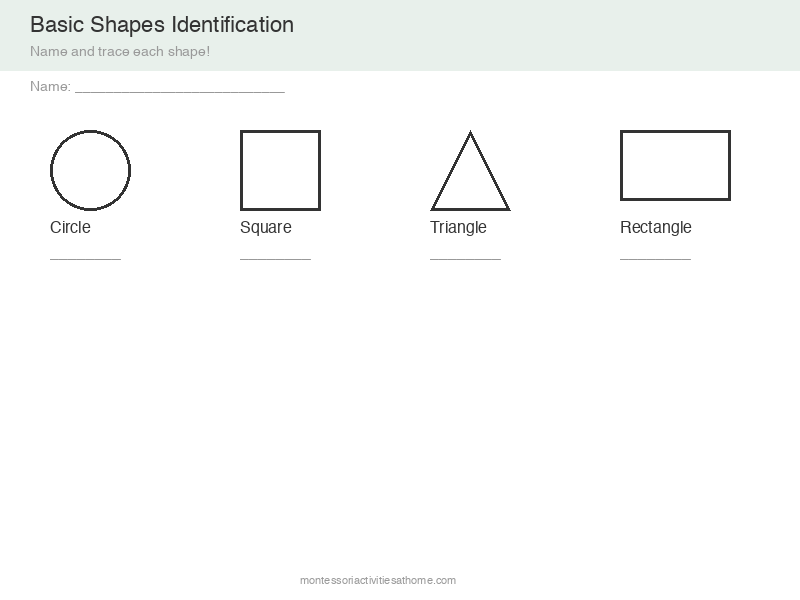
Shape hunt (ages 3–5). Draw a circle, square, triangle, and rectangle on four notes. Your child walks the room and sticks each one on something that shape: the clock, the window, a book, a picture frame. For a 4- to 6-year-old, write letters instead and stick the S on the sofa and the C on a cup, saying the sound as they go. Builds: shape recognition in the real world, then first-sound isolation.
Painter’s tape
Floor lines (ages 1.5–4). Tape a straight line, a zigzag, and a curve across the floor. Walk them heel to toe, jump over them, drive cars along them. Builds: balance, body control, following a path with the eyes.
Giant letters (ages 4–6). Tape one letter, three feet tall, on the floor. Your child walks it in the same order they would write it, then drives a car along it. Builds: letter formation with the whole body, which sticks better than a pencil for a lot of kids.
Cardboard box
Posting box (ages 1–2). Cut a slot in a shoebox lid. Your child posts jar lids or old gift cards through the slot, then opens the box to find them again. Builds: hand-eye coordination, release, object permanence.
Old keys and a padlock
Which key fits? (ages 3–6). Four or five keys from the drawer, one padlock, one key that opens it. Try each one. Builds: trial and error, wrist rotation, self-correction (the lock tells them, not you).
Fridge magnets
Sticks or does not stick (ages 4–6). One strong magnet and a tray of small objects: paper clip, cork, spoon, coin, jar lid, crayon. Guess first, test, sort into two piles. Builds: scientific thinking, prediction, classification.
Outside and garage: a bucket, nuts and bolts, a box flap
Bucket and a wide paintbrush
Water painting (ages 1.5–6). A bucket of water and a house-painting brush. Your child paints the fence, the deck, the front steps, and watches it all dry and disappear. Big shoulder movements come before small finger ones. A 4- to 6-year-old paints their name in water on the driveway, as big as they can. Builds: gross motor, shoulder and arm strength, then letter formation.
Nuts and bolts
Match and thread (ages 3–6). Three or four bolts of clearly different sizes and their nuts, mixed on a tray. Find the nut that fits and thread it all the way down. Small parts, so this is a sitting-with-you activity. Builds: wrist rotation, size discrimination, self-correction.
Cardboard box flap
How far does it roll? (ages 4–6). Lean a box flap against the bottom step to make a ramp. Roll a toy car down and mark where it stops with chalk. Raise the ramp a step and try again, asking which will go farther before you test it. Builds: prediction, comparing distances, an honest first experiment.
Item you already own → activity → ages → skill
| Item you already own | Activity | Ages | Skill it builds |
|---|---|---|---|
| Muffin tin | Ten-frame math | 4–6 | Number bonds to 10 |
| Muffin tin | Sort pasta or beans by type | 2–4 | Classification, pincer grip |
| Colander | Thread spaghetti (weave a lace for 4+) | 1.5–6 | Hand-eye coordination |
| Measuring cups | How many quarter-cups make a cup? | 4–6 | Capacity, early fractions |
| Kitchen tongs | Cotton-ball (or ice cube) transfer | 2–5 | Hand strength, midline crossing |
| Sponge | Squeeze water bowl to bowl | 2–4 | Hand strength for writing |
| Dry beans | Piles of five, count by 5s | 5–6 | Skip counting |
| Rice | Writing tray: strokes before letters | 3–6 | Pre-writing control |
| Jar lids | Match lids to jars | 1.5–3 | Size discrimination, wrist rotation |
| Egg carton | Sound cups (digit cups for 5+) | 4–6 | Letter sounds, early addition |
| Cardboard tube | Drop tube | 1–2 | Cause and effect |
| Medicine syringe | Fill to the line | 2–6 | Precision, measurement |
| Bath shelf items | Sink or float | 2–5 | Prediction, classification |
| Clothespins | Pin socks on a line | 2.5–5 | Pincer strength (pencil grip) |
| Clothespins | Clip count on a plate | 4–6 | Number recognition |
| Laundry basket | Sock pairing | 2–4 | Visual matching |
| Laundry basket | Basket toss from taped lines | 2–6 | Gross motor, counting |
| Sticky notes | Shape hunt (sound hunt for 4+) | 3–6 | Shapes, first sounds |
| Painter’s tape | Floor lines / giant letters | 1.5–6 | Balance, letter formation |
| Cardboard box | Posting box | 1–2 | Hand-eye, object permanence |
| Old keys + padlock | Which key fits? | 3–6 | Trial and error, self-correction |
| Fridge magnet | Sticks or does not stick | 4–6 | Scientific thinking |
| Bucket + paintbrush | Water painting / driveway letters | 1.5–6 | Shoulder strength, letter formation |
| Nuts and bolts | Match and thread | 3–6 | Wrist rotation, size discrimination |
| Box flap | Ramp: how far does it roll? | 4–6 | Prediction, measuring |
Shelf rotation checklist (print this)
In our house the shelf gets reset on Sunday night. Ten minutes with the list, forty without it.
- Pick 4–6 activities from the table. Mix rooms: at least one gross motor, one fine motor, one math or letters.
- Make one something already mastered (confidence) and one a stretch (growth).
- Check every tray against the small-parts rule for the youngest child who can reach the shelf.
- Put everything each activity needs on its tray, including the cleanup cloth.
- Place trays on the low shelf, left to right, with space between them.
- Show each new activity once, slowly, without talking.
- Notice which trays get chosen and which get ignored. Do not fix the ignored ones mid-week.
- After 1–2 weeks, swap out the ignored trays. Keep the favorite as long as it keeps getting chosen.
- This week’s shelf: 1. 2. 3. 4. 5. 6.
What if your junk drawer does not match this list?
It will not, exactly. You have a whisk, a broken calculator and forty twist ties, and I did not write about any of them. That is what the Activity Generator is for: tell it what is actually in your junk drawer and how old your child is, and it gives you activity ideas built from those items, one skill and one tray each. It is free to try.
Frequently Asked Questions
What household items are best for Montessori activities?
The most useful ones are a muffin tin, kitchen tongs, wooden clothespins, painter’s tape, jar lids, a cardboard box, and a bucket with a paintbrush. Each one works across several ages, costs nothing extra, and is a real object rather than a toy, which is what Montessori materials are meant to be.
Are activities with household items really Montessori, or just play?
What makes an activity Montessori is the setup, not the material: one skill isolated at a time, everything child-sized and on a tray, a slow silent demonstration, a built-in way for the child to notice their own mistakes, and freedom to repeat. A colander and dry spaghetti set up that way is closer to Montessori than an expensive material handed over with no presentation.
How many activities should I put out at once?
Four to six is plenty. Put them on a low shelf, each on its own tray, and swap out the ones that get ignored after one or two weeks. Keep the favorite out as long as your child keeps choosing it, because repetition is where the skill actually gets built.
Which of these are safe for a 1-year-old who still puts things in their mouth?
Skip beans, rice, nuts and bolts, and anything that fits through a toilet-paper tube, which is the common rule of thumb for choking hazards. Stick to the large-object activities: jar lids into a posting box, pom-poms down a cardboard tube, sock pairing, water painting with a bucket, and floor tape lines. Supervise every activity at this age.
How long should my child stay with an activity?
There is no target. A two-year-old might do the sponge transfer for three minutes, and a five-year-old might match nuts and bolts for twenty. The goal is that they come back to it on their own another day. End the activity while it is still going well, and it will get chosen again.
Do I need a tray or a special shelf?
No. A baking sheet, a shoebox lid, or a placemat does the same job: it marks where the activity begins and ends and catches the mess. Any low shelf or the bottom of a bookcase works as the activity shelf, as long as your child can reach it without asking.
Print these next
The paper version of each activity above:
- Ten frames counting and number bonds to 10 — after the muffin tin
- Counting by 5s — after the bean piles
- Pre-writing strokes — after the rice tray
- Basic shapes identification — after the sticky-note shape hunt
- Activity Generator — for whatever is in your drawer that is not on this list, and custom math worksheets for the numbers your child is working on this week