Uppercase Letter Tracing A-Z | Free Printable
About This Worksheet
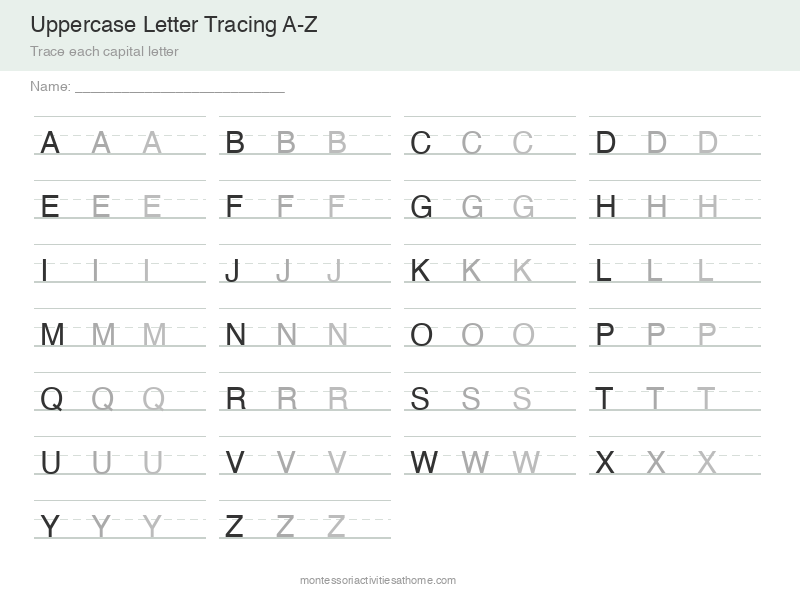
The whole capital alphabet on a single page, each letter with its own guidelines and two fading models to trace. This is the sheet to use once your child has worked through the letter groups and needs mixed practice, or as a periodic check on which letters have actually stuck.
Capitals are usually taught first because they are easier to form — more straight lines, fewer letters that live below the baseline, and no confusable pairs like b and d. That said, capitals are not what your child will mostly read. Treat this as the entry point rather than the destination, and move to the lowercase sheet once the shapes are reliable.
Do not work through all twenty-six in one sitting. A row of four letters is a realistic session for a preschooler, and the sheet is designed to be reprinted as often as you like.
Skills Practiced
How to Use This Worksheet
- Pick four letters, not twenty-six. Choose a row, or choose the letters in your child's name. A full alphabet in one sitting turns a willing child into a reluctant one.
- Name the letter's sound, not just its name. “That's M, it says mmm.” Sound-first is the Montessori approach and it transfers directly to early reading.
- Reprint rather than erase. Fresh sheets keep the work feeling light. Erasing focuses everyone's attention on the mistake.
- Watch for reversals without worrying. Reversed letters are developmentally normal well into kindergarten. Point out the correct form calmly and move on.