Straight Line Letter Tracing Worksheet
About This Worksheet
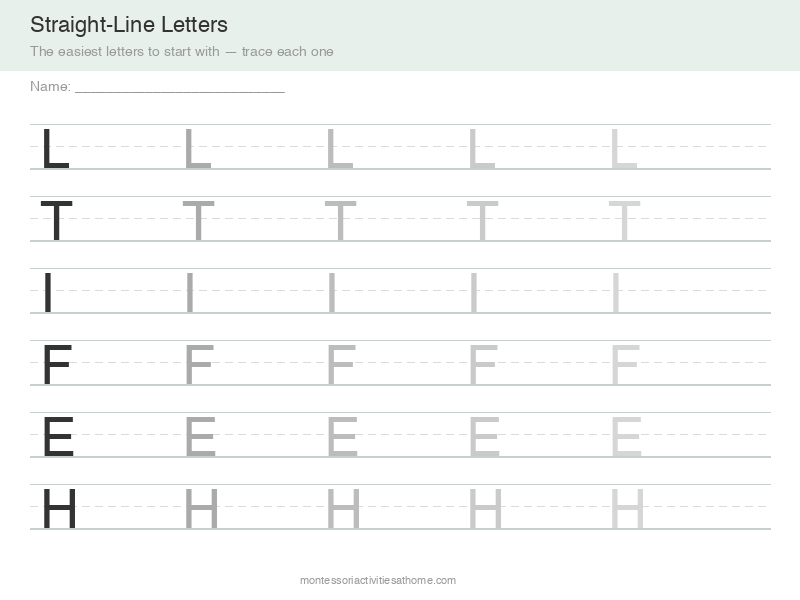
The straight line letters — L, T, I, F, E and H — are the six capitals made entirely of straight lines, which makes them the easiest letters in the alphabet to form and the sensible place to start this free printable tracing worksheet. No curves, no diagonals, no change of direction mid-stroke. A child who has managed the pre-writing strokes can usually manage these almost immediately, and that early success matters more than most parents expect.
Each letter gets its own row on proper handwriting guidelines: a solid top line, a dashed midline and a heavier baseline. The guidelines do real work — they are what turns a recognisable shape into a correctly sized letter that sits where it should. The first letter in each row is solid to copy from, and the four that follow fade progressively, so your child moves from tracing to writing without a jarring step.
Introduce one letter at a time rather than working across the whole sheet in a session. If the letter happens to start your child's name, start there — the motivation of writing their own initial does more work than any amount of encouragement.
Skills Practiced
How to Use This Worksheet
- Follow the guidelines, not just the shape. A letter that is the right shape but floats above the baseline still needs correcting later. Point out where the letter starts and where it rests.
- Start at the top, every time. Every one of these letters begins with a downward stroke from the top line. Establishing that habit now prevents the bottom-up formation that becomes hard to undo.
- One letter per session is plenty. Trace one row, then find that letter somewhere real — on a cereal box, a road sign, a book cover. The transfer is what makes it stick.
- Expect wobble. Overshooting the line and uneven spacing are normal for years, not weeks. If the letter is recognisable and started in the right place, that is a success.