Food & Snacks Word Search | Free Printable
About This Worksheet
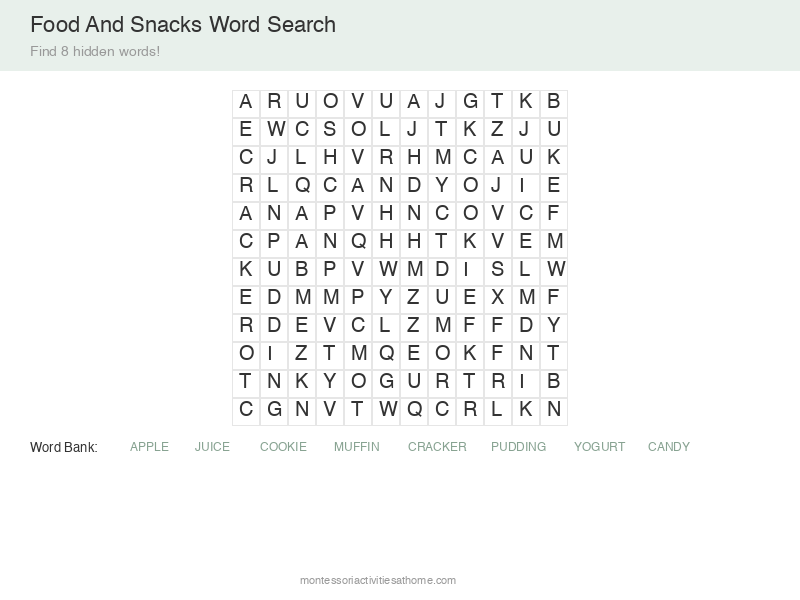
Food words are wonderfully practical vocabulary. When your child can read “apple,” “carrot,” and “broccoli,” they are learning words they will encounter on grocery lists, menus, and recipes for the rest of their lives. This word search hides ten common food words in a 10x10 grid, using horizontal, vertical, and a few simple diagonal placements for children ready for a moderate challenge.
This worksheet is designed for children who have completed a few easier word searches and are ready for a step up. The larger grid and inclusion of diagonal words adds complexity, while the familiar food vocabulary keeps the content accessible. The word bank includes: apple, carrot, broccoli, bread, egg, corn, soup, cookie, banana, and cheese.
Beyond reading practice, this worksheet naturally opens conversations about food, nutrition, and cooking. Which of these foods does your child eat at home? Which ones have they helped prepare? Connecting literacy to real-world experience is a core Montessori principle, and food is one of the most natural connections there is.
Skills Practiced
How to Use This Worksheet
- Review the word bank first. Read each food word together. For trickier words like “cheese,” break it into sounds: “ch-ee-se.” This phonics warm-up prepares them for recognizing the letter patterns in the grid.
- Tackle diagonals last. If your child is new to diagonal words, suggest they find all horizontal and vertical words first. Then explain that some words go “corner to corner” and help them find the first diagonal together.
- Use it as a spelling tool. After finding a word, ask your child to write it on a separate piece of paper without looking at the grid. This turns the word search into a two-phase activity: finding and then spelling from memory.
- Cook something from the list. Pick a food from the word search and make it together. Bake a cake, cook rice, or make soup. Connecting the written word to a real activity creates lasting vocabulary retention.
Not sure this is the right level? Our guide to free printable word search puzzles for kids walks through every age in turn — see what to expect from a word search for 6 year olds or a word search for 7 year olds, and which puzzle to print next.